Carnival Around the World: How Mardi Gras Compares to Venice, Binche, Cologne, Basel, Trinidad and Notting Hill
Mardi Gras is a New Orleans word, but the party behind it is much older and much more widespread. Carnival, the stretch of feasting and costume before Lent, is held in cities from Belgium to Trinidad, and each one has its own idea of what a parade is for.
If you are planning New Orleans for 2027, a quick tour of the others helps you see what is distinctive about the Crescent City. It also gives you ideas if you want to build a second carnival into your year. Here is how six well-documented ones compare, based on what their own organisers publish.
The New Orleans baseline
Mardi Gras 2027 falls on Tuesday, 9 February [1]. Ash Wednesday follows on 10 February. The season builds from Twelfth Night on 6 January, as we explain in our guide to Carnival season. The big parades roll through the final two weeks, and watching them from the street costs nothing; the city bills it as "The Greatest Free Show on Earth" [1].
What makes New Orleans unusual is that the parades are run by private social clubs, the krewes, and that riders throw things to the crowd. Our guide to Mardi Gras throws covers what to catch.
Venice: masks, not floats
Venice's official 2027 Carnival runs from 23 January to 9 February [2], so it ends on the same Tuesday as Mardi Gras. The organisers frame it around masks, costumes, traditional sweets and the history of the Serenissima, with private palaces turned into venues for dances [2]. It is a city-as-theatre event more than a float parade, and the official site lists a dinner show among its offerings [2].
Compared with New Orleans: same end date, but costume and indoor events lead, where New Orleans is built around street parades and throws.
Binche, Belgium: one costume, one day
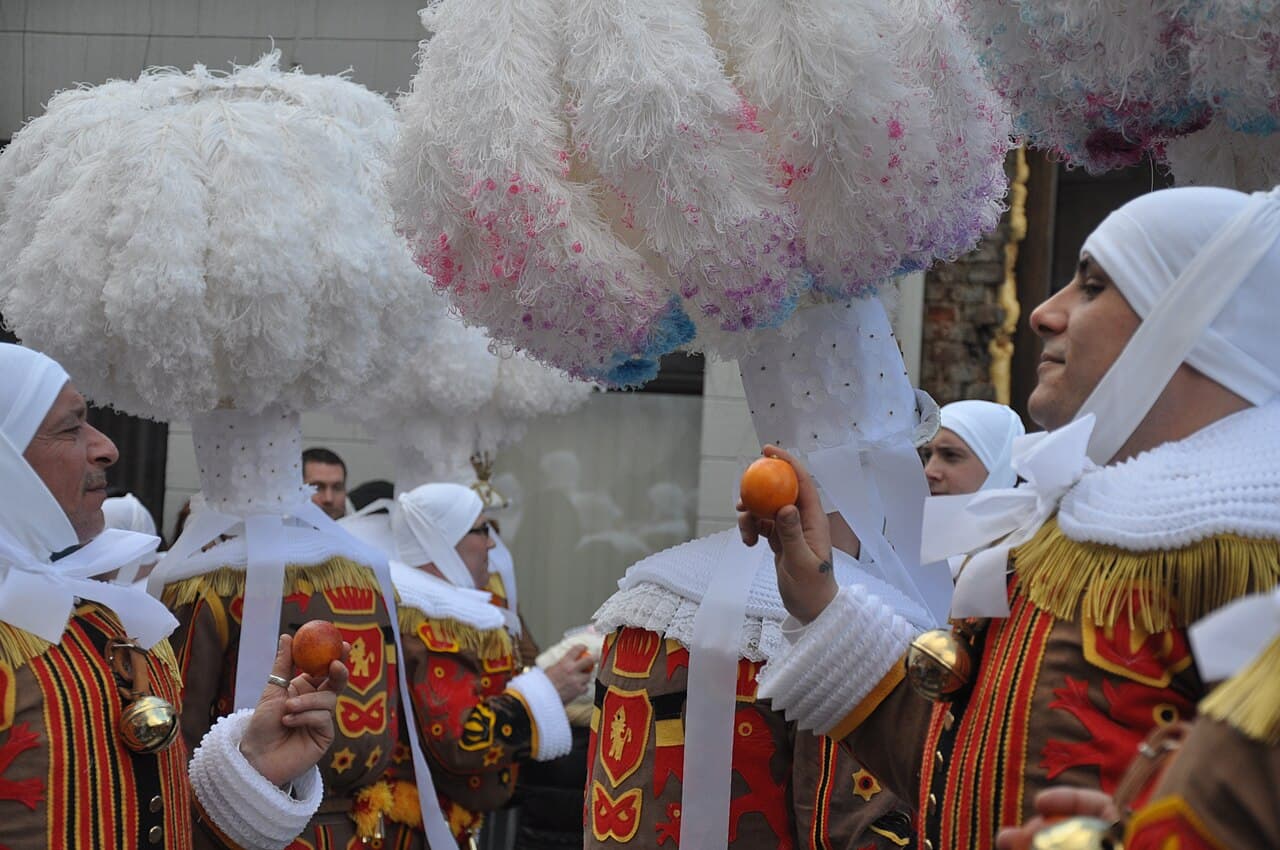
Binche's 2027 carnival is on 7, 8 and 9 February [3]: Sunday, Monday and Tuesday, the same Tuesday as Fat Tuesday. The town's own history page says the origins are unclear. The earliest mention of the Gille is from the 18th century, and a popular legend links the costume to Incas who appeared at festivities in 1549 [3].
The programme is tightly scripted [4]. On Shrove Sunday a procession leaves at 4:00 pm, but without the traditional Gille costume. Monday has a round dance on the Grand-Place and fireworks. The main event is Tuesday: the Gilles dance through the streets from 8:30 am, then parade from 3:00 pm wearing ostrich-feather hats and throwing oranges [4].
The rules are strict. The Gille costume can only be worn on that one day, and it may not leave the city. Only men from Binche families, or those who have lived in town for at least five years, may wear it. Around one thousand Gilles take part [5].
Compared with New Orleans: a single tradition with a single costume, thrown oranges instead of beads, and a closed membership. New Orleans is the opposite: many krewes, many costumes, and anyone can stand on the route.
Cologne: Rosenmontag and a theme every year
Cologne's Festkomitee describes the Rosenmontagszug (Rose Monday parade) as the high point of every Carnival season. Its floats parody current topics from politics, sport and business, and each year follows a session motto [6]. The 2027 motto is "Morje es, wat do drus mähs!", which the committee ties to the idea of the future and taking action yourself.
The committee's figures for the 2026 parade give a sense of scale [7]: about 11,500 participants, 1,122 musicians in 60 bands, and 94 grandstands. The route is 7.5 km long, and roughly 2,000 police officers were deployed. The organisers say 300 tonnes of sweets were thrown, and that the participants pay for the throws themselves [7].
Compared with New Orleans: the Monday before Ash Wednesday rather than Tuesday, one main parade rather than a two-week run, and satire is the point. Krewe floats in New Orleans do carry themes, but satire of the day's politics is not the organising idea.
Basel: the carnival that starts after Ash Wednesday
Basel breaks the pattern. The Fasnacht begins on the Monday after Ash Wednesday, and the official countdown for next year points to 15 February 2027 [8]. At exactly 4:00 am the city-centre lights go out and the cliques set off, lit by their head lanterns and around 200 large lanterns [9]. This is the Morgestraich.
The afternoon Cortège runs on Monday and Wednesday between 1:30 and 6:00 pm, with about 11,000 participants [9]. Basel calls itself a Sujetfasnacht: each group builds a new satirical theme every year [9]. The organisers also ask visitors to leave painted faces, foam noses, jester caps and excessive drinking at home, which is nearly the reverse of a New Orleans crowd's habits [8].
The earliest historical mention the Comité cites is the "böse Fasnacht" of 1376 [10], and UNESCO added the Basler Fasnacht to its list of intangible cultural heritage in 2017 [10].
Compared with New Orleans: it follows the church calendar the other way round, starts in the dark, and is built on drumming and piccolos rather than brass bands.
Trinidad and Tobago: Monday and Tuesday on the street
The National Carnival Commission's history says street Carnival was restricted to the Monday and Tuesday in 1943, after decades of criticism from the upper class, and that the festival was banned during the Second World War [11]. Before that, celebrations ran for the three days before Ash Wednesday. The steelpan grew out of the street parades between 1935 and 1945, and calypso is, in the commission's words, mainly of African origin [11].
Compared with New Orleans: the two share a French Creole and African heritage, and both have music at the centre. In Trinidad it is steel bands and calypso; in New Orleans it is brass bands, marching bands and second lines.
Notting Hill, London: late summer, not Lent
The odd one out is Notting Hill Carnival, which is not tied to Lent at all. The 2027 dates are 28 to 30 August: a steel band competition on the Saturday, a family day with J'ouvert and a children's parade on Sunday, and the adults' parade on Monday [12]. The Saturday is ticketed; the Sunday and Monday are free to all [12]. The organisers list mas bands, steel bands, Brazilian bands, soca and calypso, and sound systems [12].
Compared with New Orleans: the same free-to-watch idea, with a Caribbean-led line-up, but in summer.
At a glance
| Carnival | 2027 dates | Signature | Free to watch? |
|---|---|---|---|
| New Orleans | Season from 6 Jan; Fat Tuesday 9 Feb | Krewe parades and throws | Yes, street parades |
| Venice | 23 Jan - 9 Feb | Masks, palace events | Dinner show is a separate offering |
| Binche | 7 - 9 Feb | Gilles and thrown oranges | Street parades and fireworks |
| Cologne | Rose Monday parade | Satirical floats | Street parade, with grandstands |
| Basel | From 15 Feb | 4 am Morgestraich, lanterns | City-centre event |
| Notting Hill | 28 - 30 Aug | Mas bands, steel pan, sound systems | Sunday and Monday free |
Trinidad's 2027 dates are not confirmed in anything we opened for this post, so we have left them out; check the National Carnival Commission before booking.
What this means for your 2027 plans
- Same Tuesday as New Orleans: Venice and Binche both end on 9 February, so you cannot do them back to back with Fat Tuesday in New Orleans.
- Basel falls a week later, after Ash Wednesday, if you want to see a different carnival right after Lent begins.
- Notting Hill in August is the easy second carnival if you like street music.
- For New Orleans itself, start with the parade schedule, then read about what to wear and the unwritten rules.
Is Mardi Gras the same as Carnival?
Not quite. Carnival is the season before Lent; Mardi Gras ("Fat Tuesday") is its last day. In 2027 it falls on 9 February. See our Carnival season guide.
Which carnivals end on the same day as Mardi Gras 2027?
Venice's official Carnival runs to 9 February 2027, and Binche's runs 7 to 9 February.
Which carnival is closest to Mardi Gras in style?
Trinidad and Tobago shares the French Creole and African roots and the street-parade focus, though its music is steelpan and calypso rather than New Orleans brass.
Is Basel's carnival held before Lent?
No. Basel starts on the Monday after Ash Wednesday, 15 February 2027, with the 4 am Morgestraich.
Do you need a ticket to watch Mardi Gras parades in New Orleans?
No. Street parades are free to watch; paid options such as bleachers and balcony packages are optional. Our cost guide breaks it down.
Build your Mardi Gras 2027 route in minutes.
Plan your parade days →Facts in this post come from each carnival's own organisers, listed in the sources below. Dates can change; check each organiser before you book.
Cover photo: Gilles at the Carnival of Binche, by Cyfray, CC BY-SA 4.0, via Wikimedia Commons.

Sources
- Mardi Gras New Orleans - Mardi Gras 2027 is Tuesday, February 9
- Carnevale di Venezia 2027 - official site
- Carnival of Binche - History
- Carnival of Binche - Shrove Days Program
- Carnival of Binche - The Gille
- Festkomitee Kölner Karneval - Rosenmontagszug
- Festkomitee Kölner Karneval - Rosenmontagszug 2026 in Zahlen
- Fasnachts-Comité Basel - Fasnachtsjahr
- Fasnachts-Comité Basel - Geschichte und Wissenswertes
- Fasnachts-Comité Basel - Basler Fasnacht
- National Carnival Commission of Trinidad and Tobago - History of Carnival
- Notting Hill Carnival - Carnival 2027
More from the Dispatch
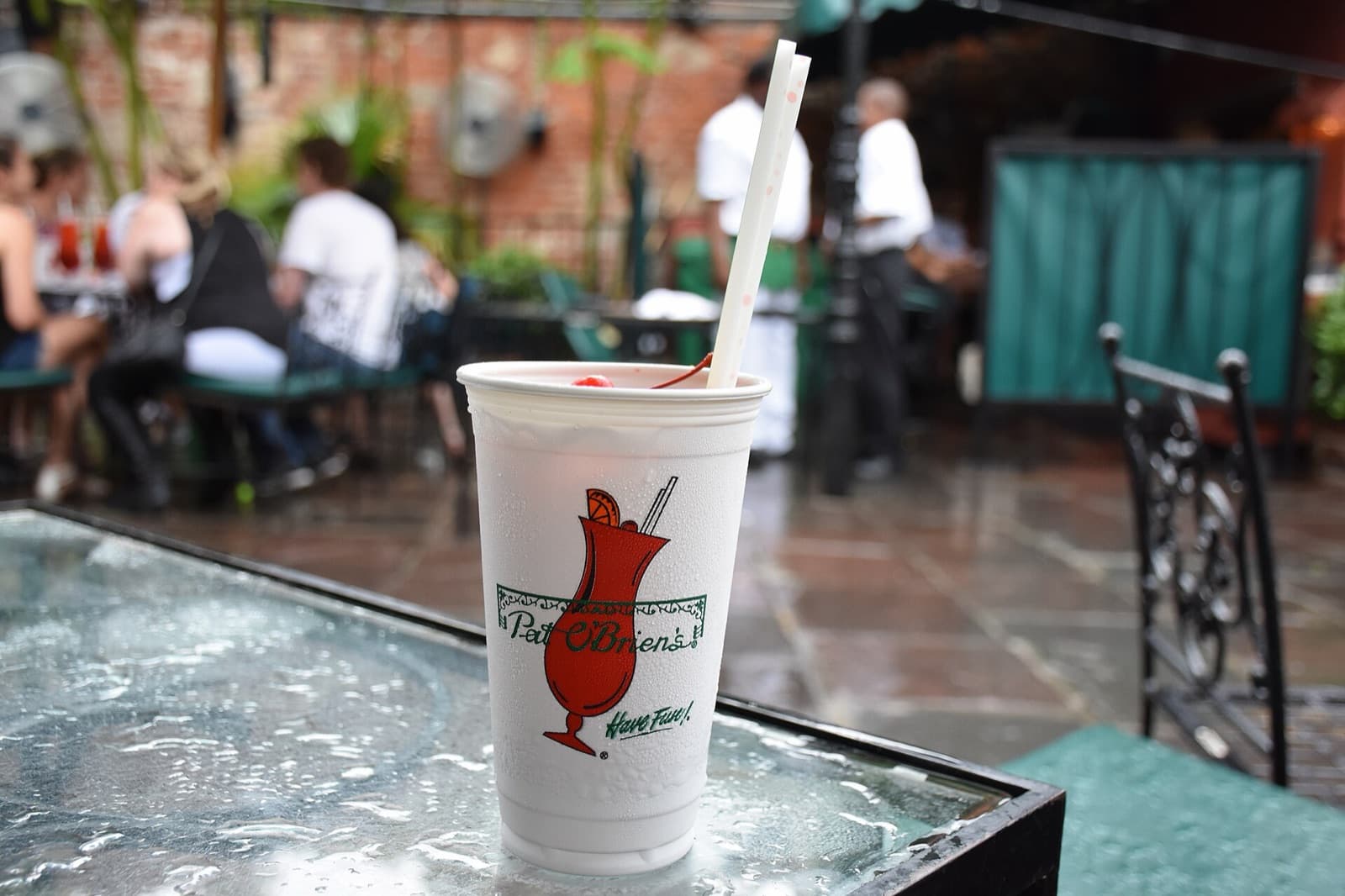
The Mardi Gras Price Index: What a Hurricane, a Po-Boy and a Beignet Cost Over Time
We tracked what New Orleans staples cost on archived menus and set them against national inflation. The Hurricane and the po-boy fell behind, the beignet pulled ahead, and the Sazerac matched restaurant prices almost exactly.

Endymion 2027: Parade Date, Start Time, Route and the Extravaganza
Endymion rolls on Saturday 6 February 2027 at 4pm, confirmed by the krewe. Here is the Mid-City route, when the floats reach each stretch, where to watch, the city rules for claiming a spot, and what to know about the Extravaganza in the Superdome.
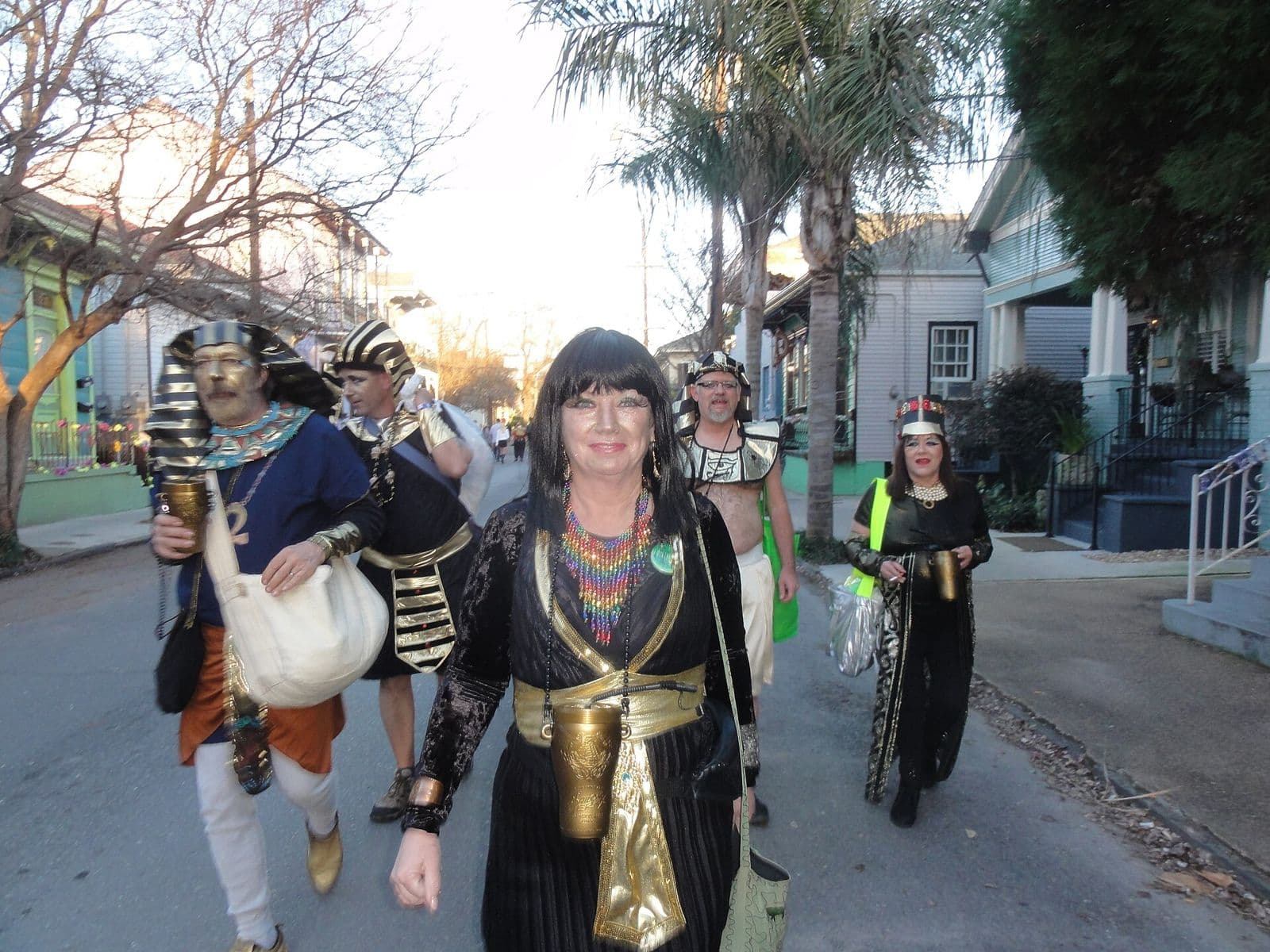
When Mardi Gras 2027 Parades Actually Start: The January Schedule
Carnival opens on 6 January 2027, but the big parades do not. Here is what rolls in January, what the quiet fortnight in between is really like, and why booking around Twelfth Night is usually a mistake.