How Much Does Mardi Gras Cost? A Local's Budget Guide to New Orleans Carnival

How Much Does Mardi Gras Cost? A Local's Budget Guide to New Orleans Carnival
Here's the secret that surprises almost every first-time visitor: Mardi Gras is free. Every parade, every float, every marching band, every strand of beads thrown from a float - free. No tickets, no wristbands, no entry gates. It is routinely called the biggest free show on Earth, and that's not marketing. The krewes themselves pay for the parades.
So when people ask "how much does Mardi Gras cost?", the honest answer is: the party costs nothing - getting here and sleeping here is where your money goes. This guide breaks down what a New Orleans Carnival trip really costs, where the money disappears, and how locals stretch a small budget into a full season of Carnival.
The short answer: three sample budgets
Costs move with dates, demand, and how far ahead you book, but for a 4-night Mardi Gras trip for two people, trips tend to land in three broad tiers:
The shoestring trip - roughly $600 to $1,200 per person. Split lodging outside the core (Mid-City, a guesthouse, or a friend's couch), groceries and po-boys instead of restaurant dinners, walking and streetcars instead of rideshares, and 100% free parades. This is closest to how many locals actually do Carnival.
The comfortable middle - roughly $1,500 to $2,500 per person. A hotel or rental near the parade route booked months ahead, a couple of proper restaurant meals, a costume that isn't just last year's thrift-store find, and a cushion for king cake, daiquiris, and souvenir throws you'll insist on keeping.
The big splurge - $3,000 and up per person. A balcony or parade-route hotel during the final weekend, reserved grandstand seats, a ball or gala ticket, and dinner reservations at the classics. Fun? Absolutely. Necessary? Not even slightly.
Want numbers tuned to your own trip? Our free Mardi Gras budget planner does the math for your dates, group size, and style.
Where the money actually goes
Lodging: the big one
Accommodation is easily half of most Mardi Gras budgets. Rooms near the St. Charles Avenue route or in the French Quarter can triple in price for the final week of Carnival, and the closer you get to Fat Tuesday, the steeper the curve. Three rules keep this under control: book early (six months out is normal, a year is better), stay near the route rather than in the middle of the crowds, and consider the whole first half of Carnival season - the early parade weekends are dramatically cheaper than the final one. Our guide to where to stay for Mardi Gras walks through the neighborhoods block by block.
Getting here and getting around
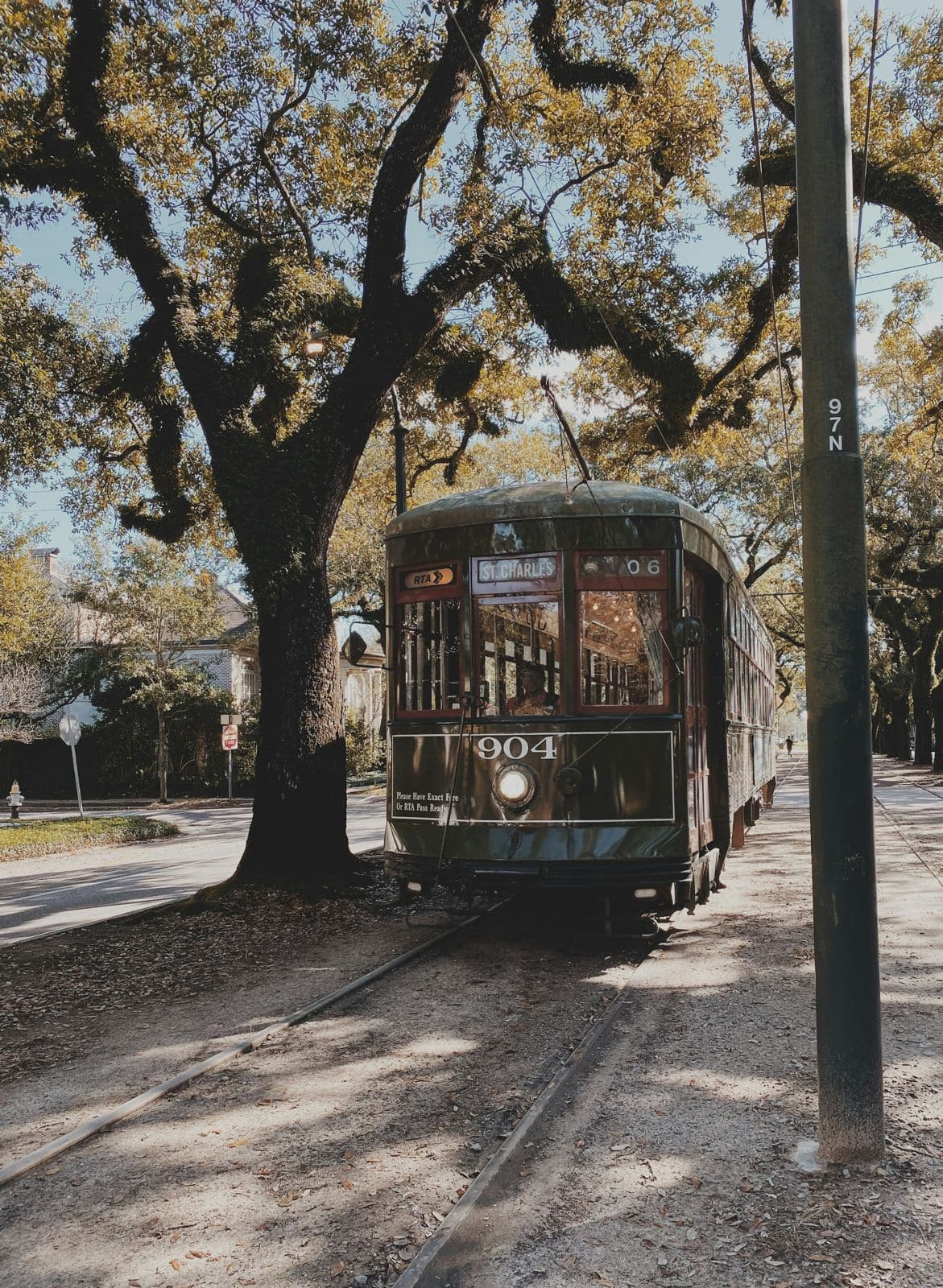
Flights into New Orleans spike for the final Carnival weekend, so flexible dates are worth real money. Once you're here, skip the rental car - parade routes close streets for hours, parking is a blood sport, and towing is merciless during Carnival. The streetcar and your own two feet are the local way; budget a few dollars a day, not a few hundred.
Food and drink
This is the category where a budget trip doesn't have to feel like one. Parade-day eating in New Orleans is picnic culture: fried chicken boxes, po-boys, king cake by the slice, a cooler you packed yourself (go-cups are legal, glass is not). You can eat brilliantly for $15 to $25 a day this way. Save one splurge dinner for a night without parades - our Mardi Gras food and drink guide has the full strategy.
Costumes and throws
You do want a costume - locals dress up, and you'll regret being the person in a plain hoodie on Fat Tuesday. But a great costume is a thrift-store project, not a purchase: purple, green, and gold, some glitter, commitment. $20 to $50 covers it. And you never need to buy beads. The parades will bury you in them for free.

What's genuinely free at Mardi Gras
It's a long list, and it's the best of Carnival:
Every parade on every route, all season long. The throws - beads, cups, doubloons, and if you're lucky a Muses shoe or a Zulu coconut. The marching bands, dance krewes, and flambeaux. People-watching on St. Charles Avenue, which is arguably the main event. Costumed strolling in the Marigny and French Quarter on Fat Tuesday morning. The tree-shaded neutral ground picnic scene that families set up at dawn. None of it costs a cent.
Use our parade planner to build a free itinerary around the parades you most want to catch.
What's worth paying for (and what isn't)
Worth it: an early-booked room within walking distance of the route; one memorable restaurant meal; a proper costume; king cake from a real bakery, eaten more than once.
Skip it unless money is no object: grandstand seats (the sidewalk experience is the authentic one), Bourbon Street balcony packages (the parades don't even go there - see our parade routes guide), and buying beads in a souvenir shop the day before a parade throws you thousands of them for free.
Local tricks that cut the bill in half
Come for the first parade weekend instead of the last one - same krewes' energy, half the hotel price, a fraction of the crowds. Fly in on a Tuesday or Wednesday. Book lodging with a kitchen and do one grocery run. Adopt a parade spot near a friendly porch rather than paying for seats. Split everything - lodging, coolers, costume supplies - with a group. And remember the season is weeks long: Carnival starts on January 6, and the early weeks are the cheap ones.
So, is Mardi Gras expensive?
Only if you do it like a tourist. The show itself - the parades, the throws, the music, the joy - costs nothing and always has. Pay for a bed, some po-boys, and a bag of glitter, and the city hands you the rest for free.
Ready to run your own numbers? Start with the budget planner, then build your parade schedule with the parade planner. Laissez les bons temps rouler - affordably.
Photos by Library of Congress / Carol M. Highsmith and Cayetano Gil on Unsplash.
More from the Dispatch
When Mardi Gras 2027 Parades Actually Start: The January Schedule
Carnival opens on 6 January 2027, but the big parades do not. Here is what rolls in January, what the quiet fortnight in between is really like, and why booking around Twelfth Night is usually a mistake.

Mardi Gras Throws, Explained: What Gets Thrown, How to Catch It & Which Krewes Have the Best
Beads are the least interesting thing thrown at a Mardi Gras parade. Here's the full New Orleans throw hierarchy - Zulu coconuts, Muses shoes, Nyx purses, Tucks toilet brushes, doubloons - plus how to actually catch them, the bead-throwing rules locals follow, and what to do with the pile afterward.
Getting Around New Orleans During Mardi Gras: Parking, Streetcars, Road Closures & Rideshare
During Carnival, New Orleans stops working like a normal city. Streetcars get replaced by buses, whole neighborhoods close to cars, and the tow trucks are not bluffing. Here's how locals actually get around Mardi Gras: parking rules, road closures, rideshare, the ferry, and why walking usually wins.