New Orleans Mardi Gras Krewes, Explained: Super Krewes, Satire and the Parades Locals Never Miss
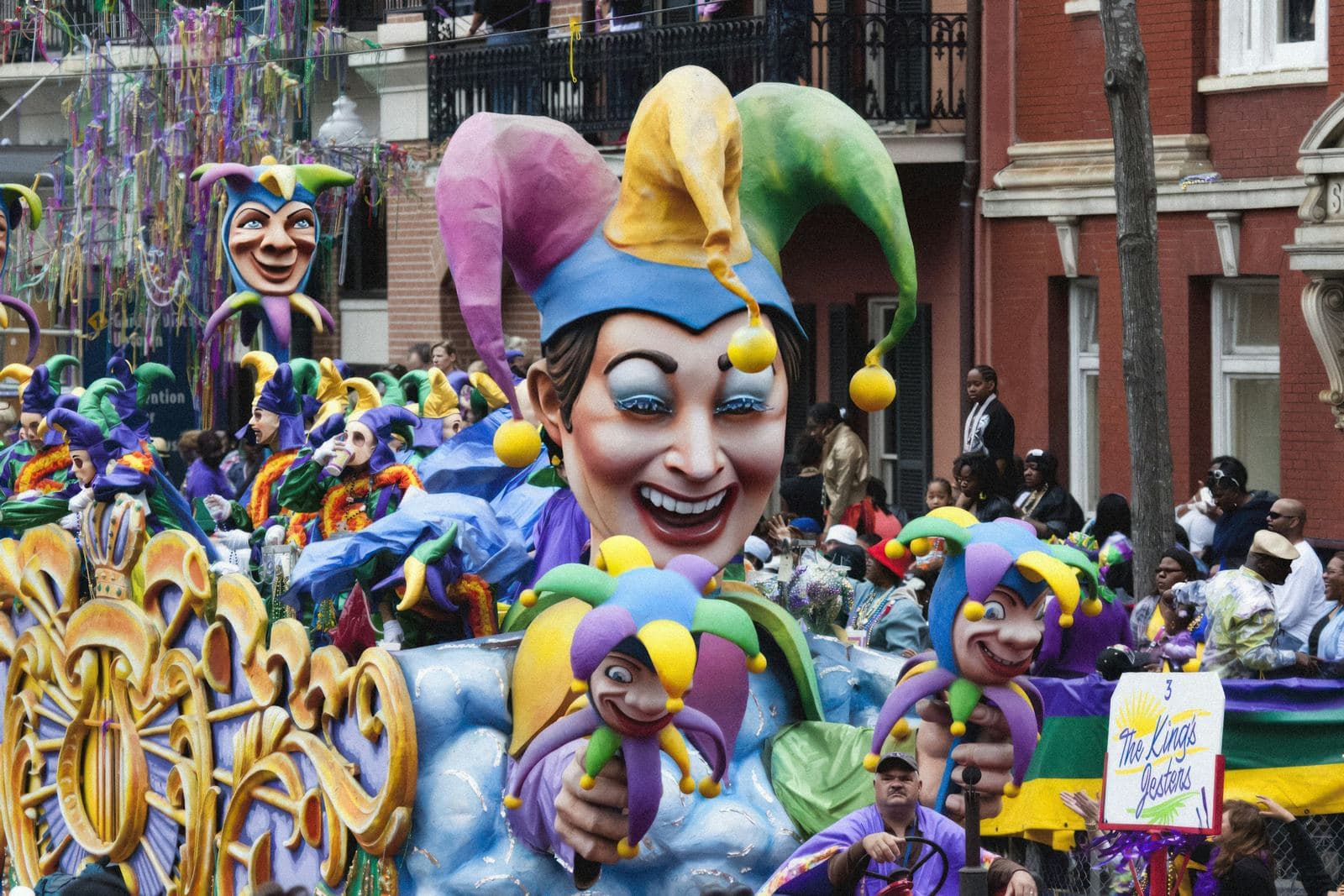
Ask a local what makes Mardi Gras run and you will not hear "the city" or "a festival company." You will hear one word: krewes. Every parade that rolls in New Orleans is built, funded and ridden by one of these private clubs, and once you understand who they are, the whole season snaps into focus. This guide explains what a krewe actually is, which New Orleans krewes deserve a spot on your schedule, and how to choose between them when parades overlap.
What Is a Mardi Gras Krewe, Exactly?
A krewe (pronounced "crew") is a membership organization that stages a parade, a ball, or both during Carnival season. Members pay dues, buy their own throws, build or lease floats and spend the entire year planning for a few hours on the route. The city issues permits and closes streets, but no tax dollars pay for beads or floats - that is all krewe members.
The word itself is a piece of invented tradition: the Mistick Krewe of Comus coined the faux-archaic spelling in 1857, and everyone since has kept it. Today there are dozens of krewes, from old-line societies that have paraded for over a century to sci-fi walking clubs founded in the last two decades.
Three things follow from the krewe system that first-time visitors rarely expect. First, every parade has its own personality, because every krewe does. Second, parades are free to watch - members foot the bill. Third, the person on a float tossing you beads paid for them personally, which is why a loud "throw me something, mister!" works better than a silent stare.
The Super Krewes: Endymion, Bacchus and Orpheus
"Super krewe" is the unofficial title for the mega-parades of the final weekend before Fat Tuesday. Think thousand-plus riders, tandem floats longer than a city block, celebrity monarchs and A-list concert headliners at the after-party.
The Krewe of Endymion rolls on the Saturday night before Mardi Gras, and it is the only super krewe with a Mid-City route. Its motto is "throw until it hurts," and the parade ends inside the Superdome with a full-scale concert. If you want maximum spectacle per hour of standing, Endymion is the pick.
Bacchus owns Sunday night. Founded in 1968, it broke the old-line mold by recruiting a national celebrity as king - a tradition it keeps to this day - and by turning the parade into pure showmanship, with signature floats like the Bacchagator returning year after year.
Orpheus, co-founded by Harry Connick Jr., closes Lundi Gras (Monday) night with the most musical parade of the season and the beloved Smokey Mary train float. It is generally the least crushed of the three, which makes it a smart choice with kids in tow.
The Icons of Fat Tuesday: Zulu and Rex
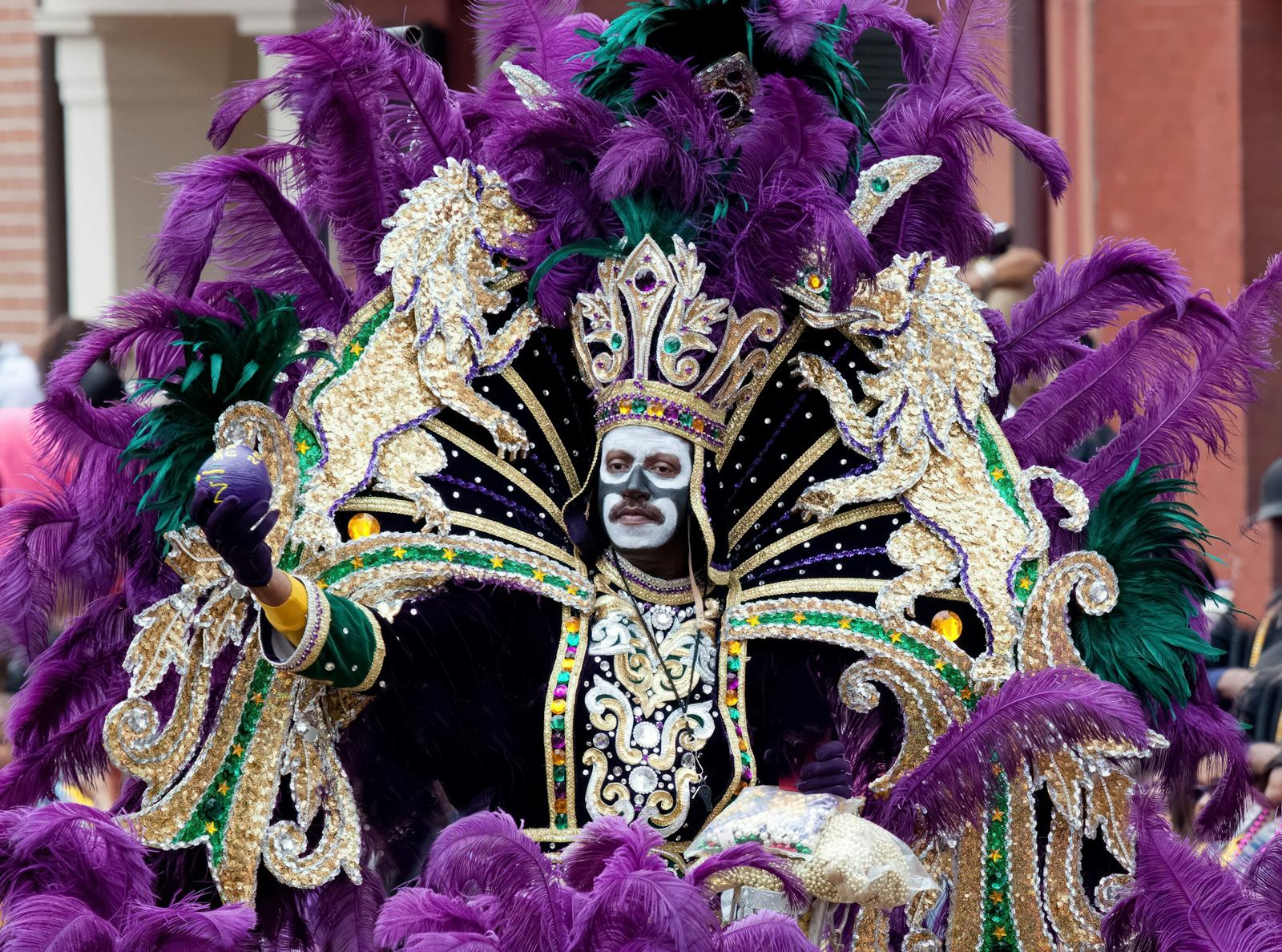
Mardi Gras morning belongs to two krewes. The Zulu Social Aid and Pleasure Club, the city's most storied historically Black krewe, rolls first. Its hand-painted coconuts are the single most coveted throw of the entire season - they are handed, not thrown, so get to the barricade and make eye contact.
Rex follows. The King of Rex is literally the King of Carnival, and the krewe gave Mardi Gras its official colors of purple, green and gold back in 1872. Rex is old-line pageantry at its finest: hand-painted floats, masked riders and traditions that have not changed in a century. Watching Zulu and Rex back to back on St. Charles Avenue is the classic Fat Tuesday morning, and it pairs perfectly with a costume and a go-cup.
The Ones Locals Never Miss: Muses, Krewe du Vieux and Chewbacchus
Ask New Orleanians which parade they refuse to skip and three names come up constantly.
The Krewe of Muses, the all-female krewe that rolls the Thursday before Mardi Gras, is famous for biting satire, the giant fiber-optic high-heel float and its hand-decorated shoe throws. A glittered Muses shoe is, alongside a Zulu coconut, the throw people brag about for years.
Krewe du Vieux is the season's id: a raunchy, sharply political walking parade through the Marigny and French Quarter in the early weeks of Carnival, with brass bands between every sub-krewe. It is emphatically not for kids, and locals would not have it any other way.
The Intergalactic Krewe of Chewbacchus is the newest cult favorite - a sci-fi and fantasy walking krewe where anyone can join for cheap dues, build a shoebox-sized "float" and hand out homemade throws. If your Mardi Gras dream is marching rather than watching, Chewbacchus is the easiest door in.
Smaller neighborhood favorites reward the curious, too. Cleopatra opens the Uptown season as the first all-female krewe on the West Bank turned Uptown mainstay, and family krewes like King Arthur are famous for generous throws and relaxed crowds.
How to Build Your Parade Schedule Around Krewes
You cannot see everything, so choose by personality rather than by name recognition. If you want spectacle, anchor your trip on the super krewe weekend of Endymion, Bacchus and Orpheus. If you want tradition, be on the route for Zulu and Rex on Mardi Gras morning. If you want the local's version, come the weekend before for Muses and the satirical krewes, when crowds are thinner and the season is still building.
Check each krewe's route and start time before you commit - Uptown parades follow the St. Charles corridor while Endymion runs Canal Street via Mid-City, and staking out a spot an hour or two ahead is enough outside the super krewe nights. Our parade schedule lists every rolling krewe with dates and routes, our krewe profiles go deeper on history and signature throws, and the parade planner will build a day-by-day plan from the parades you pick.
The krewes are the reason Mardi Gras feels less like an event and more like a living tradition. Learn a few names, pick your personalities, and by the time the first floats turn onto the avenue you will be watching the parade like someone who lives here.
Cover and in-body photos by Library of Congress / Carol Highsmith's America on Unsplash, free to use under the Unsplash License.
More from the Dispatch
When Mardi Gras 2027 Parades Actually Start: The January Schedule
Carnival opens on 6 January 2027, but the big parades do not. Here is what rolls in January, what the quiet fortnight in between is really like, and why booking around Twelfth Night is usually a mistake.
Mardi Gras Throws, Explained: What Gets Thrown, How to Catch It & Which Krewes Have the Best
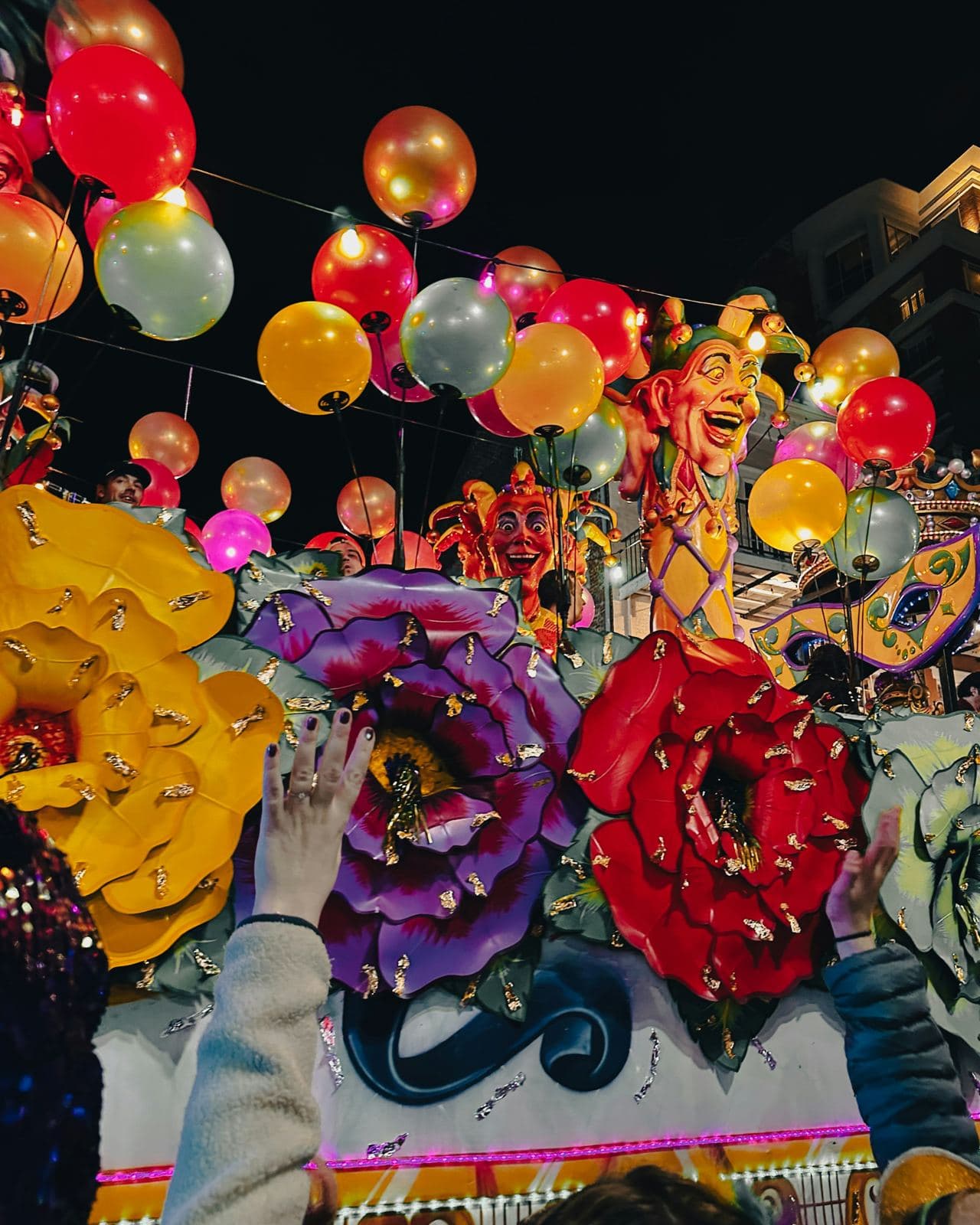
Beads are the least interesting thing thrown at a Mardi Gras parade. Here's the full New Orleans throw hierarchy - Zulu coconuts, Muses shoes, Nyx purses, Tucks toilet brushes, doubloons - plus how to actually catch them, the bead-throwing rules locals follow, and what to do with the pile afterward.
Getting Around New Orleans During Mardi Gras: Parking, Streetcars, Road Closures & Rideshare
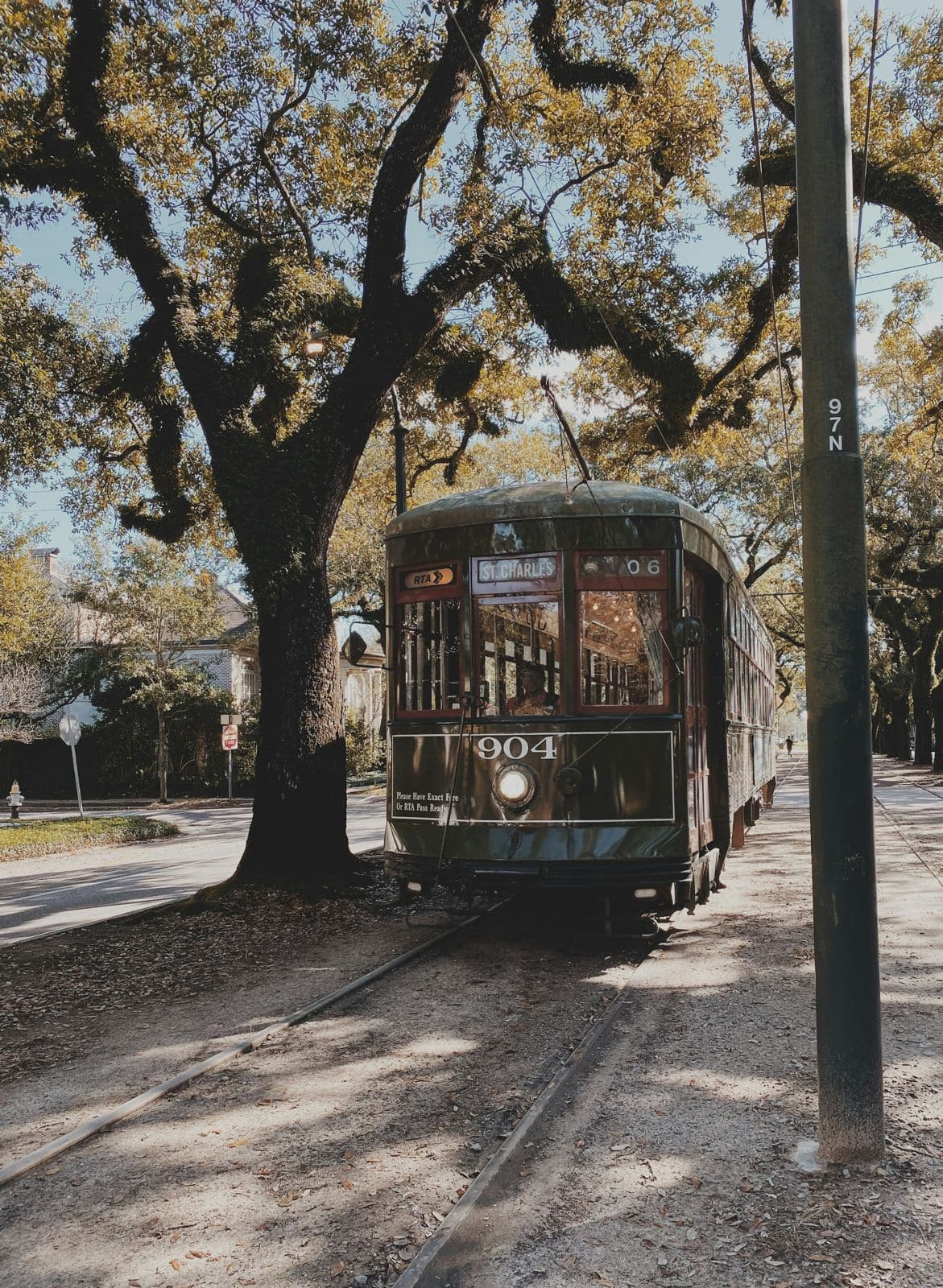
During Carnival, New Orleans stops working like a normal city. Streetcars get replaced by buses, whole neighborhoods close to cars, and the tow trucks are not bluffing. Here's how locals actually get around Mardi Gras: parking rules, road closures, rideshare, the ferry, and why walking usually wins.