How New Orleans Mardi Gras Parades Actually Work: Your Complete Insider Guide
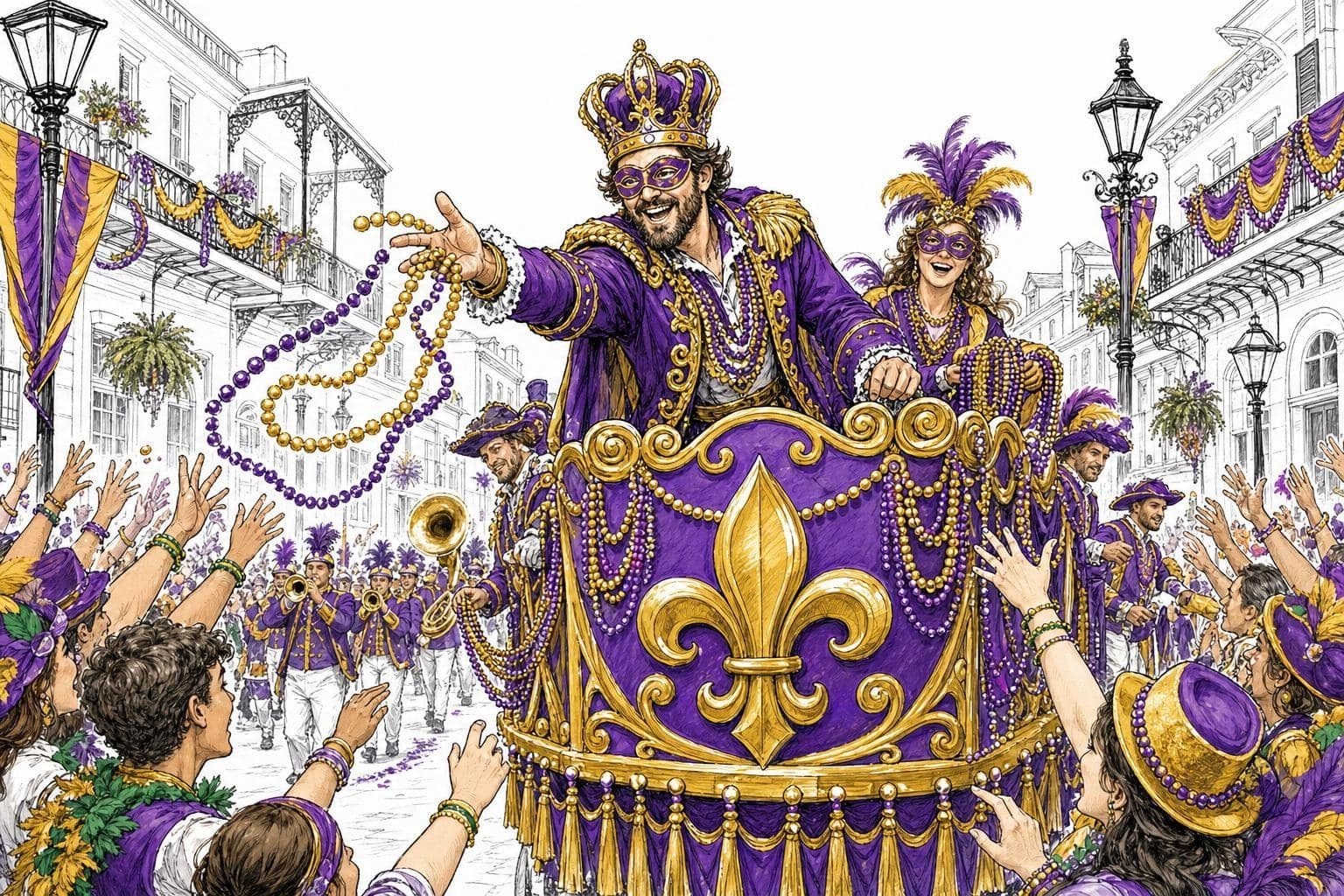
Most first-timers arrive expecting a single wild day. What they find instead is a city that has been building toward something magnificent for weeks - a rolling, block-by-block crescendo that doesn't peak until Fat Tuesday itself. That's the secret New Orleans locals have always known: Mardi Gras isn't a day. It's a season.
Here's how to navigate it like you've been doing this for years.
The Season: Weeks of Parades, Not Just One Day
Carnival season officially begins on January 6 - Twelfth Night, the Feast of the Epiphany - and runs all the way to Fat Tuesday, the day before Ash Wednesday. That can be anywhere from five to eight weeks of parades, balls, and celebrations depending on when Easter falls.
The season starts quietly. Smaller neighborhood krewes roll in January, giving the city a chance to warm up. Then, roughly two weeks before Fat Tuesday, the energy shifts dramatically. The biggest, most elaborate parades are concentrated in the final two weekends before the big day, with the super krewes - Endymion, Bacchus, and Orpheus - anchoring the last weekend. Fat Tuesday itself brings Zulu and Rex rolling down St. Charles Avenue in back-to-back processions that feel like the whole city exhaling at once.
There are normally around 80 parades scheduled in New Orleans during Carnival, running from Twelfth Night through Mardi Gras Day. Whenever you visit, you'll catch something worth seeing. But if you only have a few days, aim for the final weekend before Fat Tuesday - that's when the super krewes roll and the city truly ignites.
The Routes: St. Charles Avenue and Canal Street
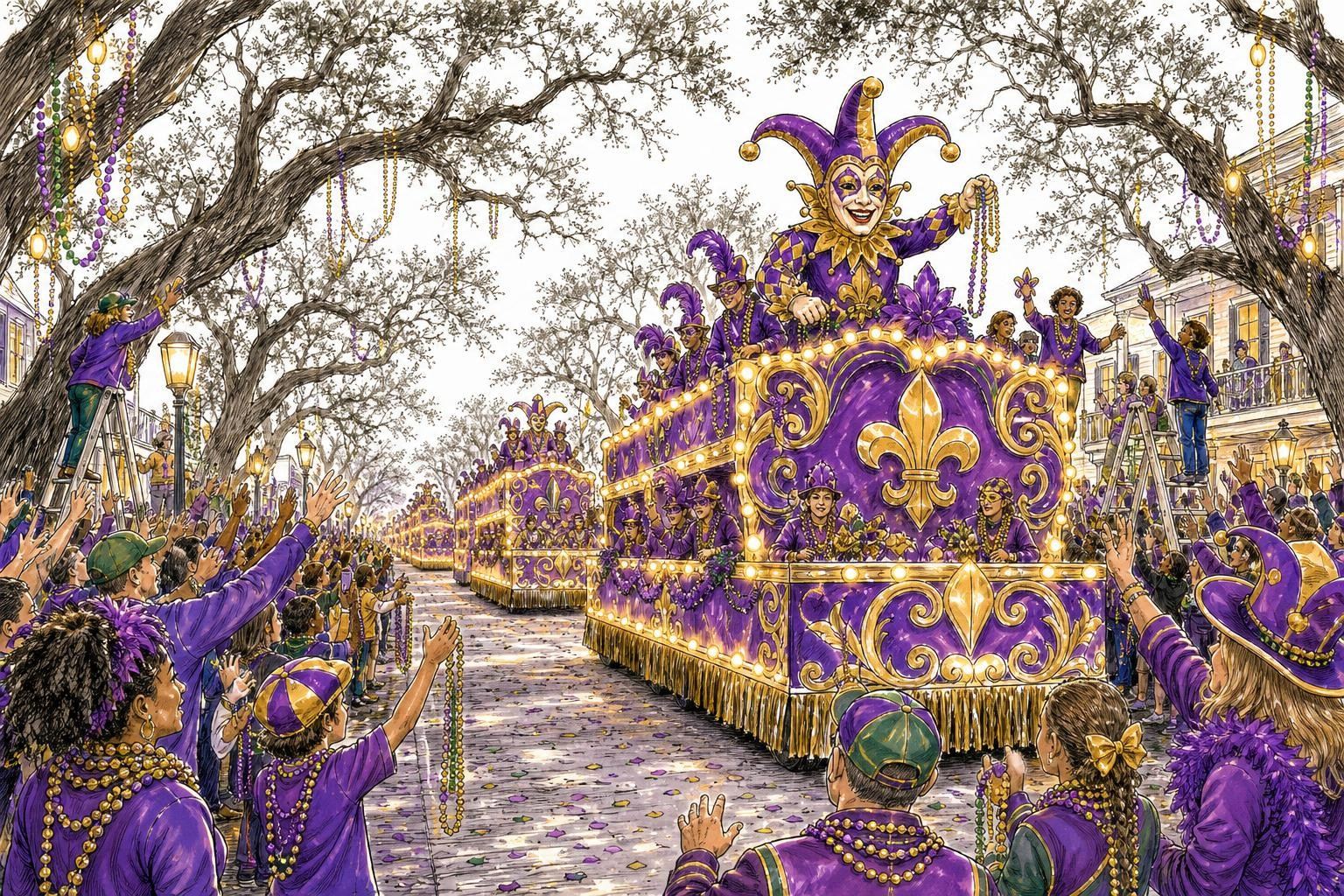
Most major Mardi Gras parades follow the same iconic path. The classic Uptown route begins at Napoleon Avenue near Tchoupitoulas Street, heads down St. Charles Avenue under the iconic oak canopy, turns onto Canal Street, and typically ends near the Central Business District.
This route is the heart of the parade experience. St. Charles Avenue, lined with historic mansions and ancient live oaks, is where families set up ladders, spread blankets on the neutral ground, and stake out spots that some clans have claimed for generations. Canal Street, where the route terminates, is wider and more chaotic - closer to the French Quarter energy.
One important note: major parades do not roll through the French Quarter itself. A fire code update in the 1970s ended that. But the route passes within a few blocks of it on Canal Street, so you're never far from the action.
Where to Watch: Neutral Ground vs. Sidewalk Side
Every New Orleans parade route has two sides: the sidewalk side and the neutral ground side - that's the grassy median running down the center of the street, where the streetcar tracks live.
For families and first-timers, the neutral ground is the move. You get floats rolling past on both sides (on two-way stretches), more room to spread out, and a more communal, picnic-style atmosphere. The stretch of St. Charles Avenue between Napoleon Avenue and Louisiana Avenue is widely considered the most family-friendly section - manageable crowds, festive but not rowdy, and close enough to the start of the route that floats still have plenty of throws left to give.
The closer you get to Canal Street and the French Quarter edge, the denser and louder the crowds become. That energy is electric if you want it - but it's a different experience than the Uptown oak canopy.
A Quick Comparison
| Feature | Uptown / St. Charles Ave | Canal Street / Downtown End |
|---|---|---|
| Atmosphere | Family-friendly, neighborhood feel | Louder, denser, more tourist-heavy |
| Crowd density | Manageable with early arrival | Very packed, especially evenings |
| Float throws remaining | Floats are fully loaded - great catches | Floats may be running lower on throws |
| Oak tree canopy | Yes - stunning at night | No |
| Best for | Families, first-timers, kids with ladders | Night owls, French Quarter visitors |
| Neutral ground available | Yes - wide and spacious | Limited |
The Krewes: Who's Rolling and What They're Known For
Krewes are chartered non-profit social organizations that design, fund, and operate the parades - each with its own history, theme, and signature throws. There are hundreds of them. Here are the ones every visitor should know.
Zulu Social Aid & Pleasure Club
Zulu rolls first on Fat Tuesday morning, and catching a Zulu coconut is one of the most coveted moments in all of Carnival. The hand-painted coconuts are so prized that, for safety reasons, they must now be handed down from the float rather than thrown into the crowd. Zulu is one of the oldest majority-Black krewes in New Orleans, with roots going back to the early 1900s - a parade steeped in history and community pride.
Krewe of Rex
Rex follows Zulu on Fat Tuesday and is known as the King of Carnival. The Rex Organization was founded in 1872 and is credited with establishing Mardi Gras royalty - Rex and his queen - as well as the official Carnival colors: purple for justice, green for faith, and gold for power. Rex also introduced the collectible doubloon coin in 1960. Catching a Rex doubloon is a classic Mardi Gras souvenir.
Krewe of Endymion
Endymion rolls the Saturday before Fat Tuesday and is a spectacle of pure scale. Endymion has 3,200+ riders and over 80 floats, making it one of the largest parades in Mardi Gras history. It's known for light-up throws, celebrity grand marshals, and a finale inside the Superdome - the only krewe that ends its parade inside the stadium for the Endymion Extravaganza, which is open to ticket-holders.
Krewe of Bacchus
Bacchus rolls Sunday evening and is famous for its celebrity monarchs and enormous floats. Founded in 1968, Bacchus broke with Carnival tradition by staging a Sunday night parade with bigger floats than anything previously seen - and by inviting a national celebrity to lead it. The Bacchus Rendezvous after-party at the convention center keeps the night going.
Krewe of Muses
Muses rolls the Thursday night before Fat Tuesday and is an all-female krewe beloved for its wit and creativity. The signature throw? Hand-decorated, glittered high-heel shoes - the most coveted non-coconut throw in the parade season. Parade-goers hold up signs, wear elaborate costumes, and do everything short of cartwheels to catch one.
Krewe of Orpheus
Orpheus rolls on Lundi Gras (the Monday before Fat Tuesday) and was co-founded by Harry Connick, Jr. in 1994. It's a super krewe with a music-forward identity and a loyal following. Lundi Gras itself is worth planning around: the Kings of Zulu and Rex arrive by boat at the Mississippi riverfront, and an all-day festival fills the Riverwalk with live music and food before Orpheus rolls that evening.
Mardi Gras Throws: How to Catch Them
Throws are the items float riders toss to the crowd - and working the crowd is half the fun. The most common throws are strings of colorful plastic beads, doubloons, decorated plastic cups, and small toys. But the signature throws are what people really chase.
Tips for catching more:
- Make eye contact. Riders look for engaged crowd members. Wave, smile, hold up a sign with your hometown on it, and shout "Throw me somethin', mister!" - the classic call.
- Stand back from the curb. Riders throw out and away from the float, so the farther back you stand, the better your chances of catching something impressive.
- Never reach into the street for a dropped throw. Put your foot on it and wait for a gap between floats to pick it up safely. Float tires are not forgiving.
- Bring a bag. A sturdy tote or backpack fills up faster than you'd expect. Beads get heavy.
- Never snatch from kids. This is the cardinal rule of parade etiquette, and the crowd will let you know if you break it.
Ladders for Kids: The New Orleans Tradition
You'll see them everywhere along the St. Charles Avenue parade route: custom parade ladders with a small seat or platform bolted to the top, giving kids a bird's-eye view above the crowd. It's a genuine New Orleans tradition, and it works beautifully.
The rules: ladder legs must be placed at least six feet back from the curb - this is a city ordinance, not just etiquette. Place your ladder back far enough that people standing in front of you can still see. Good parade karma is real, and the crowd notices.
Arrive early to claim your spot. For the biggest evening parades on the final weekend, locals stake out prime neutral ground positions hours in advance. For a first-timer, arriving two to three hours before a parade starts is a reasonable target for a solid spot.
Planning Your Day Around Multiple Parades
On the big parade days, multiple krewes roll in sequence - sometimes starting in the late morning and continuing well into the night. The trick is to pick a spot and let the parades come to you, rather than chasing them around the city.
A few general timing principles:
- Daytime parades (like Zulu and Rex on Fat Tuesday) start in the morning - be on the route by early morning for a good spot.
- Evening super krewe parades (Endymion, Bacchus, Orpheus) roll in the late afternoon or evening - plan to arrive and settle in by early afternoon.
- Between parades, explore the neighborhood. The Uptown stretch of St. Charles has bars, restaurants, and coffee shops that become parade-day institutions.
Practical Tips: The Stuff That Actually Matters
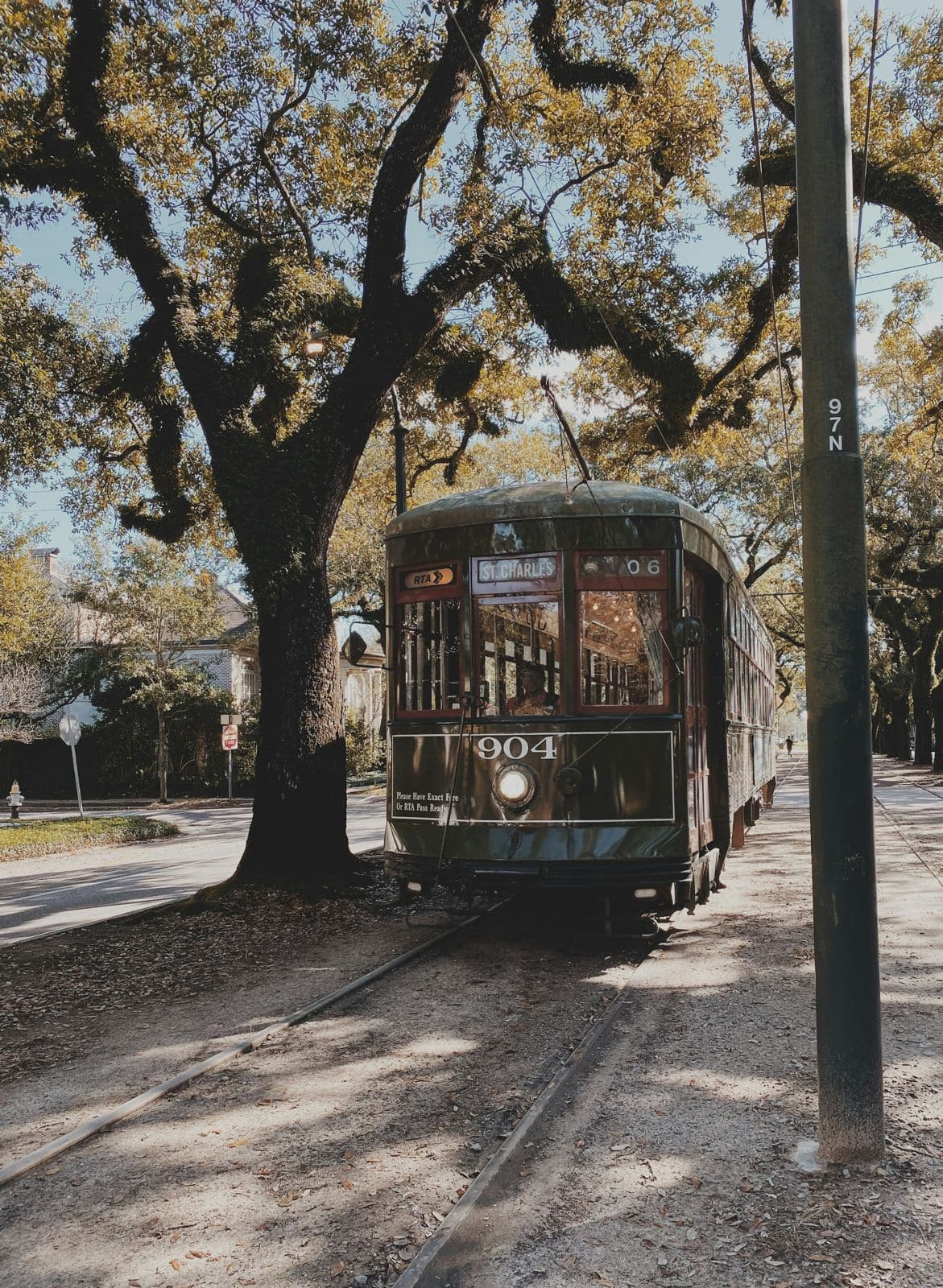
Getting around: Driving and parking near parade routes is extremely difficult - streets are closed up to two hours before a parade, and tow trucks work fast. Rideshares surge in price. The best strategies are to walk, bike, or use the RTA streetcar (download the app to pay and track schedules, which change during parade season).
Restrooms: This is non-negotiable planning. Public port-o-potties are stationed along the route at key intersections, but lines get long. Many churches, schools, and businesses along St. Charles sell all-day bathroom wristbands for a small fee - typically $10-$20 - and it's genuinely one of the best investments of the day.
Safety:
- Keep belongings in a cross-body bag or fanny pack - hands-free for catching throws.
- Establish a meeting spot with your group before the crowds swell.
- If you have kids, write a phone number on their arm in marker.
- Never cross barricades or run into the street for a throw.
- The Uptown route is family-friendly; keep behavior appropriate for the neighborhood.
Weather: New Orleans in February can be warm, cold, or both in the same day. Dress in layers, wear closed-toe shoes (the neutral ground gets muddy), and bring a rain layer - parades roll in light rain.
Cash: Many vendors along the route are cash-only. ATMs run out. Bring some.
Ready to Plan Your Trip?
Pick the days you are in town and get the parades worth catching, a spot to stand and when to book - free, no sign-up.
Plan your parade days →Mardi Gras rewards the prepared. Know your krewe, claim your spot on the neutral ground, bring a bag for throws, and let the city do the rest. Laissez les bons temps rouler - let the good times roll.
More from the Dispatch
When Mardi Gras 2027 Parades Actually Start: The January Schedule
Carnival opens on 6 January 2027, but the big parades do not. Here is what rolls in January, what the quiet fortnight in between is really like, and why booking around Twelfth Night is usually a mistake.
Mardi Gras Throws, Explained: What Gets Thrown, How to Catch It & Which Krewes Have the Best
Beads are the least interesting thing thrown at a Mardi Gras parade. Here's the full New Orleans throw hierarchy - Zulu coconuts, Muses shoes, Nyx purses, Tucks toilet brushes, doubloons - plus how to actually catch them, the bead-throwing rules locals follow, and what to do with the pile afterward.
Getting Around New Orleans During Mardi Gras: Parking, Streetcars, Road Closures & Rideshare
During Carnival, New Orleans stops working like a normal city. Streetcars get replaced by buses, whole neighborhoods close to cars, and the tow trucks are not bluffing. Here's how locals actually get around Mardi Gras: parking rules, road closures, rideshare, the ferry, and why walking usually wins.