Mardi Gras Food and Drink: A Local's Guide to Eating Your Way Through Carnival
Mardi Gras Food and Drink: A Local's Guide to Eating Your Way Through Carnival
Ask a New Orleanian what Mardi Gras tastes like and you will not get one answer. You will get a list: cinnamon and sugar from a slice of king cake, fried chicken eaten standing on the neutral ground, a roux-dark gumbo after a cold parade night, powdered sugar on your jacket that you will find again in July. Carnival is a season of eating as much as it is a season of parades, and the locals plan their food with the same seriousness they plan their costumes.
This guide covers what to actually eat and drink during Mardi Gras in New Orleans: the king cake rules everyone should know, how to eat well on a parade day, the restaurant classics worth planning around, and the drinks that define the season.
King cake: the official food of Carnival
King cake is not just a dessert, it is a calendar. The season starts on January 6, Twelfth Night, and from that day until Fat Tuesday the bakeries of New Orleans produce hundreds of thousands of braided, iced, purple-green-and-gold rings. Eating king cake outside the season is considered bad form by most locals, which is exactly what makes the first slice of January taste so good.
The essentials:
- The baby. Somewhere inside the cake hides a small plastic baby. Whoever gets the slice with the baby buys the next king cake. This is a binding social contract - office break rooms run on it for two straight months.
- Traditional vs. filled. The classic is a cinnamon brioche ring with icing and sanded sugar in purple, green, and gold. Fillings like cream cheese, praline, or Bavarian cream are a modern (and delicious) heresy.
- Where to get one. Every local has a fierce bakery allegiance. Try a classic from a neighborhood bakery, then a filled one from one of the newer artisan shops, and pick your side.
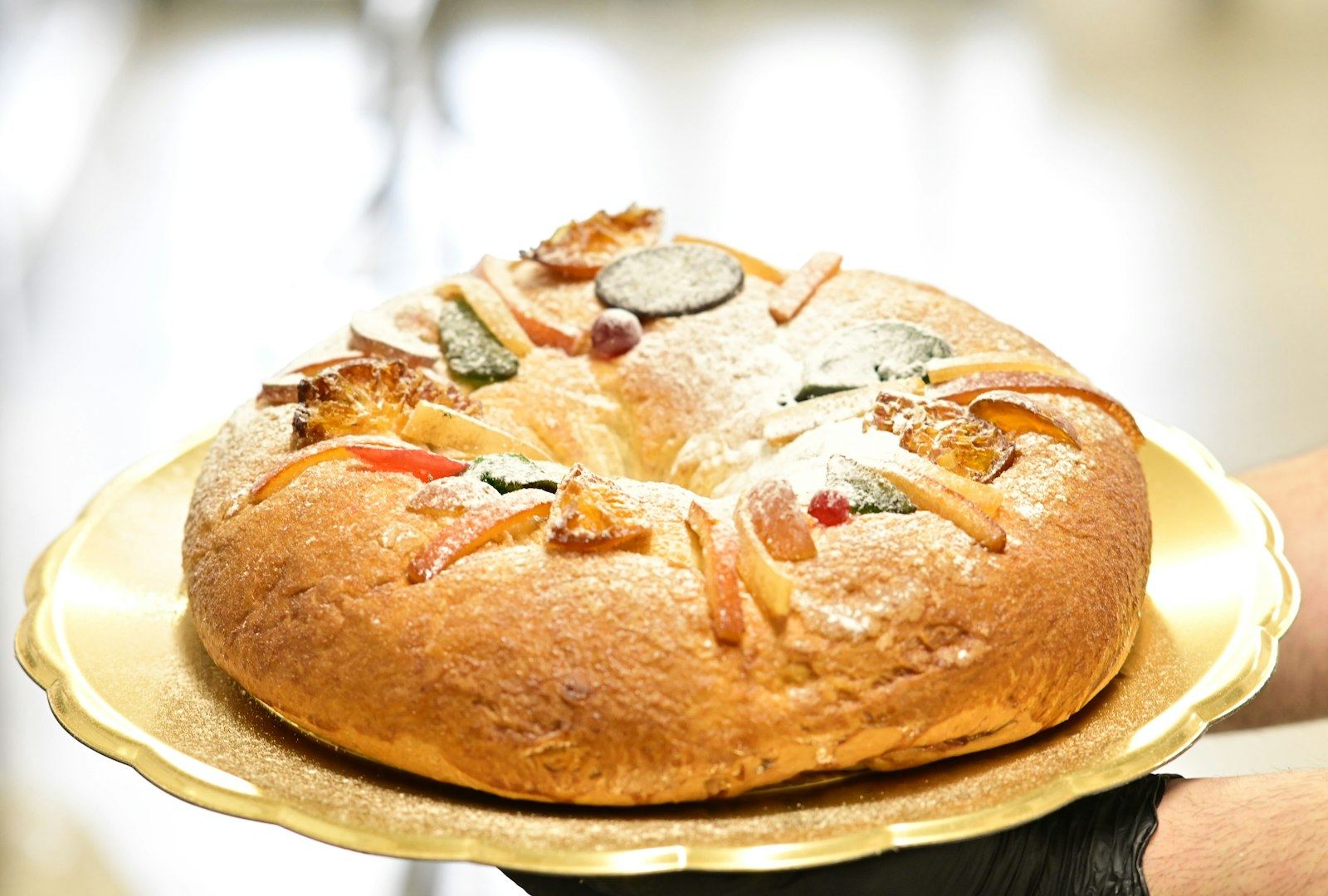 A French-style couronne des rois, the ancestor of the New Orleans king cake. Photo by Pasquale Farro on Unsplash.
The New Orleans king cake descends from the French galette and couronne des rois brought over in the 1800s, then made gloriously its own with Carnival colors and that plastic baby.
Parade-day food: eat like you are running a marathon
A parade day is long. You might stake out a spot on St. Charles Avenue at 9 a.m. and still be catching throws after dark. Locals treat parade food as logistics, not an afterthought.
The parade-route classics:
- Fried chicken. The unofficial official food of the parade route. Grab a box before you claim your spot - it travels well, feeds a crowd, and tastes better outside.
- Po-boys. A dressed shrimp or roast beef po-boy is a two-hand commitment, so eat it during a gap between parades. The bread matters: light, crackly New Orleans French bread is non-negotiable.
- Jambalaya and red beans. Look for the neighborhood spots and pop-ups ladling out warm paper bowls along the Uptown route. On cold parade nights, nothing beats it.
- King cake at the ladder. Families staked out with their ladder seats almost always have a king cake box open. Make friends.
Local strategy: eat a real breakfast before you head out, carry water and snacks for the kids, and remember that many restaurants along the route stop seating or close entirely on the biggest parade days. If a spot is on the route, assume you cannot get a table during the parade itself.
The restaurant classics worth planning around
Carnival is also high season for the city's legendary dining rooms. If you want a proper sit-down meal, book early and aim for off-parade hours.
- Gumbo. A dark-roux chicken and andouille gumbo, or a seafood gumbo thick with shrimp and crab, is the dish of the season. Cold February nights were made for it.
- Red beans and rice. The traditional Monday dish - and Lundi Gras, the Monday before Fat Tuesday, is the most Monday of Mondays. Eating red beans on Lundi Gras is quietly one of the most local things you can do.
- Crawfish. Carnival overlaps with the start of crawfish season. If the weather has cooperated, late-season parades come with boiled crawfish by the sack. Ask a local to teach you the pinch-and-suck technique once, then never look back.
- Oysters. Chargrilled with butter and parmesan, or raw with a cold beer while you recover from a parade.
Beignets and cafe au lait: the recovery meal
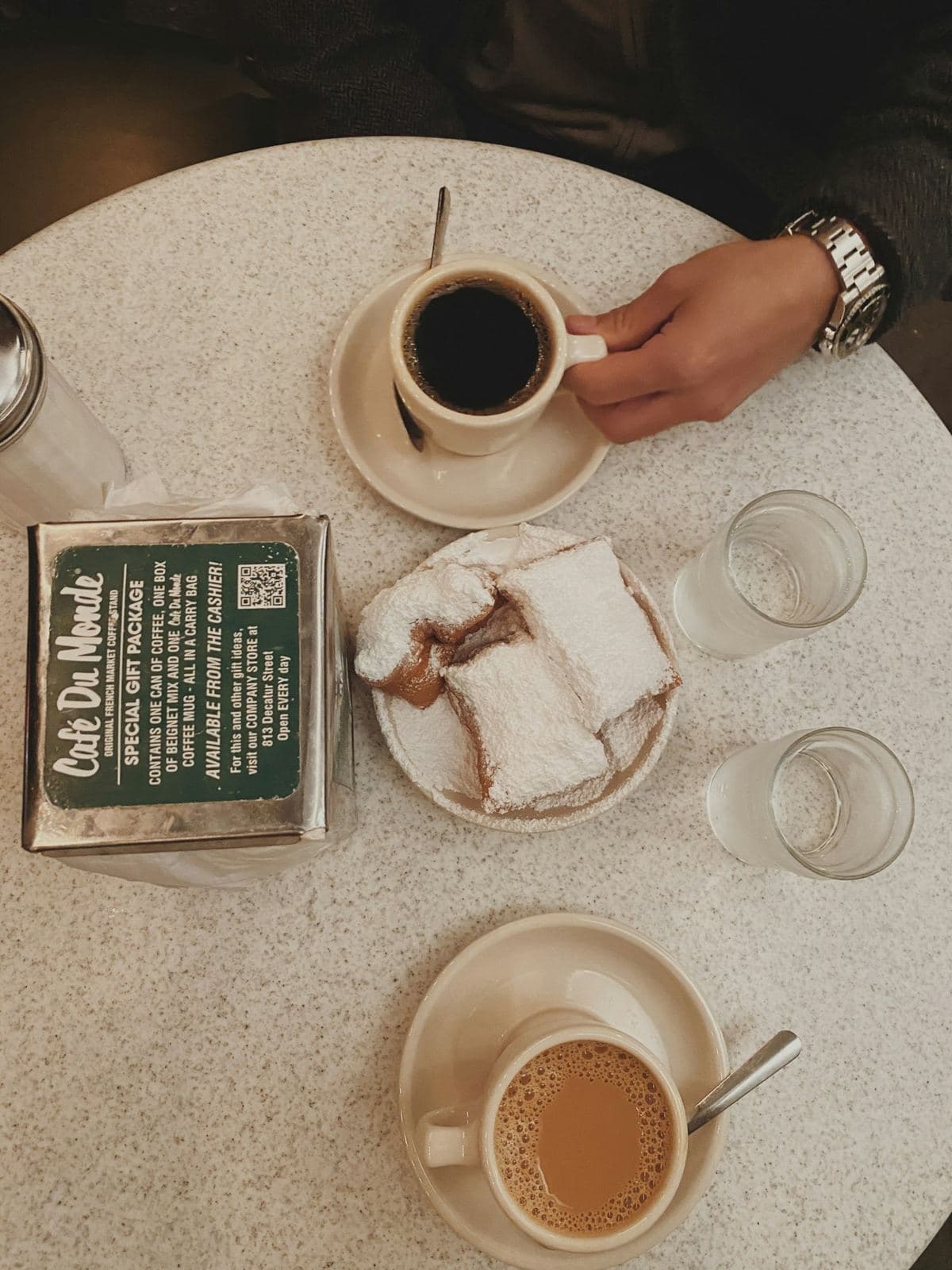
There is a reason the beignet is the most photographed food in the city. Square pillows of fried dough buried under powdered sugar, with a cafe au lait made from coffee and chicory - it is the breakfast before an early parade and the 2 a.m. reset after a long night on the route. The classic move is the French Quarter institution that never closes during Carnival, but neighborhood coffee stands fry them just as hot. One rule: never wear black, and never inhale while biting.
What to drink at Mardi Gras
New Orleans allows open containers in public - the famous go-cup - which shapes the whole drinking culture of Carnival. Some essentials:
- The Sazerac. The city's official cocktail: rye whiskey, Peychaud's bitters, sugar, and a rinse of absinthe. Best enjoyed in an old hotel bar, not on the route.
- The Hurricane. Sweet, red, rum-heavy, and stronger than it tastes. One is festive. Two is a decision.
- Local beer. The go-cup workhorse of the parade route. Grab a local brew from a corner store and you are doing it right.
- Milk punch and Irish coffee. The cold-morning parade drinks of choice for the Uptown crowd.
- Non-alcoholic done well. Sweet tea, chicory coffee, and the neon-bright nectar cream soda are all deeply local. Nobody will blink at what is in your go-cup.
Go-cup rules: plastic only, no glass on the street, and finish or transfer your drink before you get in a car. During parades, police enforce the glass rule seriously.
A one-day Carnival eating itinerary
For a big parade Saturday, a local-approved plan looks like this:
- Morning: beignets and cafe au lait, or a bakery stop for king cake to bring to the route.
- Midday: fried chicken box on the neutral ground while the first parade rolls.
- Afternoon gap: split a dressed po-boy, refill the water bottles, coffee if it is cold.
- Evening: gumbo or red beans somewhere warm off the route, or a bowl from a pop-up stand if you are staying for the night parades.
- Late night: beignets again. Yes, again.
Frequently asked questions
When can you eat king cake? Traditionally from January 6 (Twelfth Night) through Fat Tuesday. Many bakeries will ship nationwide during the season.
What food is Mardi Gras known for? King cake above all, plus gumbo, jambalaya, red beans and rice, po-boys, fried chicken on the parade route, boiled crawfish, and beignets.
Can you drink alcohol on the street during Mardi Gras? Yes, in open plastic containers (go-cups). Glass is prohibited on the street and the rule is enforced during parades.
Do restaurants stay open during Mardi Gras? Most do, but many near the parade routes close or stop seating during parades, and the famous dining rooms book out weeks ahead. Reserve early and plan meals around the parade schedule.
Hungry and planning a trip? Pair this guide with our parade guide and our neighborhood guide to build a Carnival day that feeds you as well as it entertains you.
Cover photo by Chelsea Audibert on Unsplash. King cake photo by Pasquale Farro on Unsplash.
More from the Dispatch
When Mardi Gras 2027 Parades Actually Start: The January Schedule
Carnival opens on 6 January 2027, but the big parades do not. Here is what rolls in January, what the quiet fortnight in between is really like, and why booking around Twelfth Night is usually a mistake.
Mardi Gras Throws, Explained: What Gets Thrown, How to Catch It & Which Krewes Have the Best
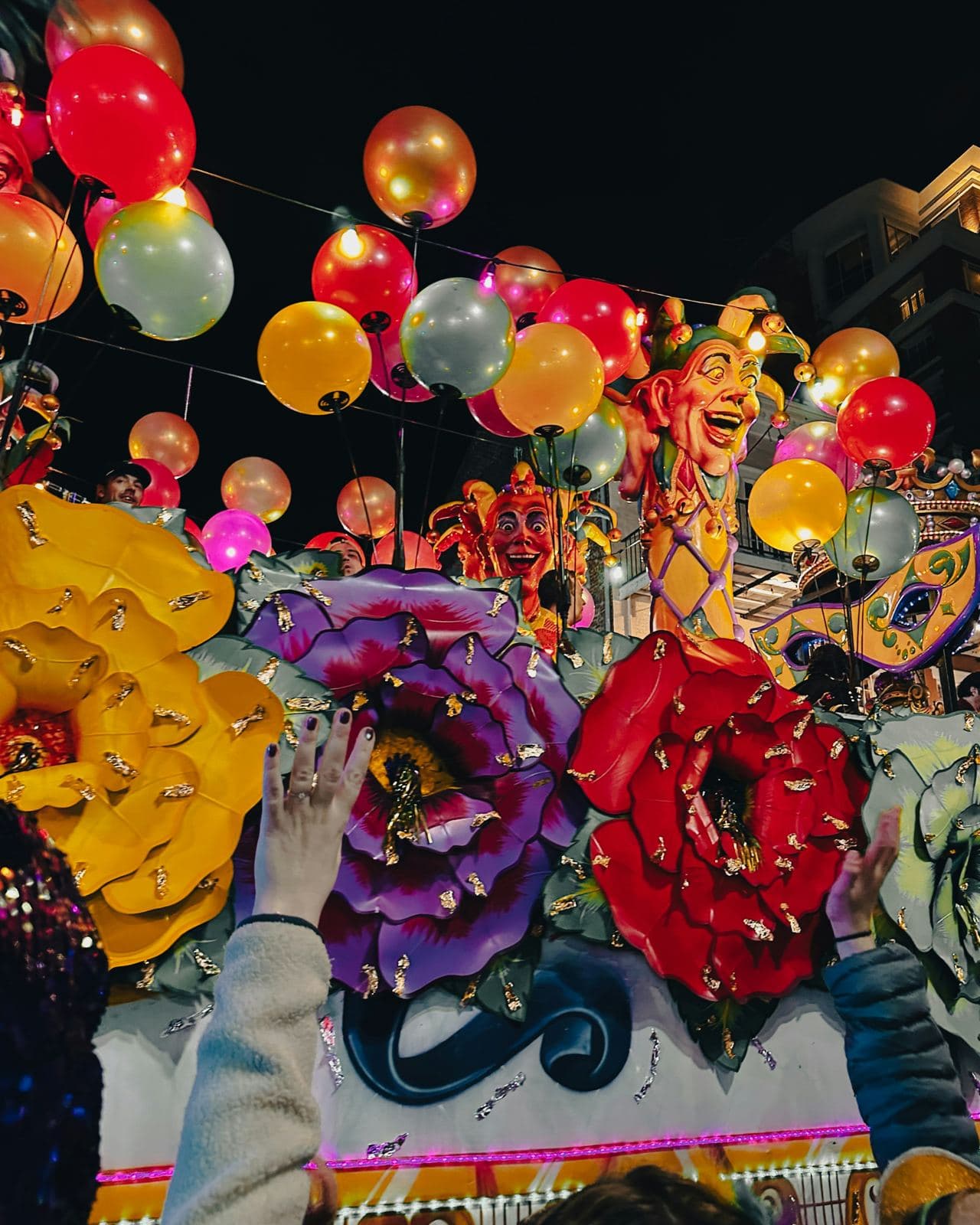
Beads are the least interesting thing thrown at a Mardi Gras parade. Here's the full New Orleans throw hierarchy - Zulu coconuts, Muses shoes, Nyx purses, Tucks toilet brushes, doubloons - plus how to actually catch them, the bead-throwing rules locals follow, and what to do with the pile afterward.
Getting Around New Orleans During Mardi Gras: Parking, Streetcars, Road Closures & Rideshare
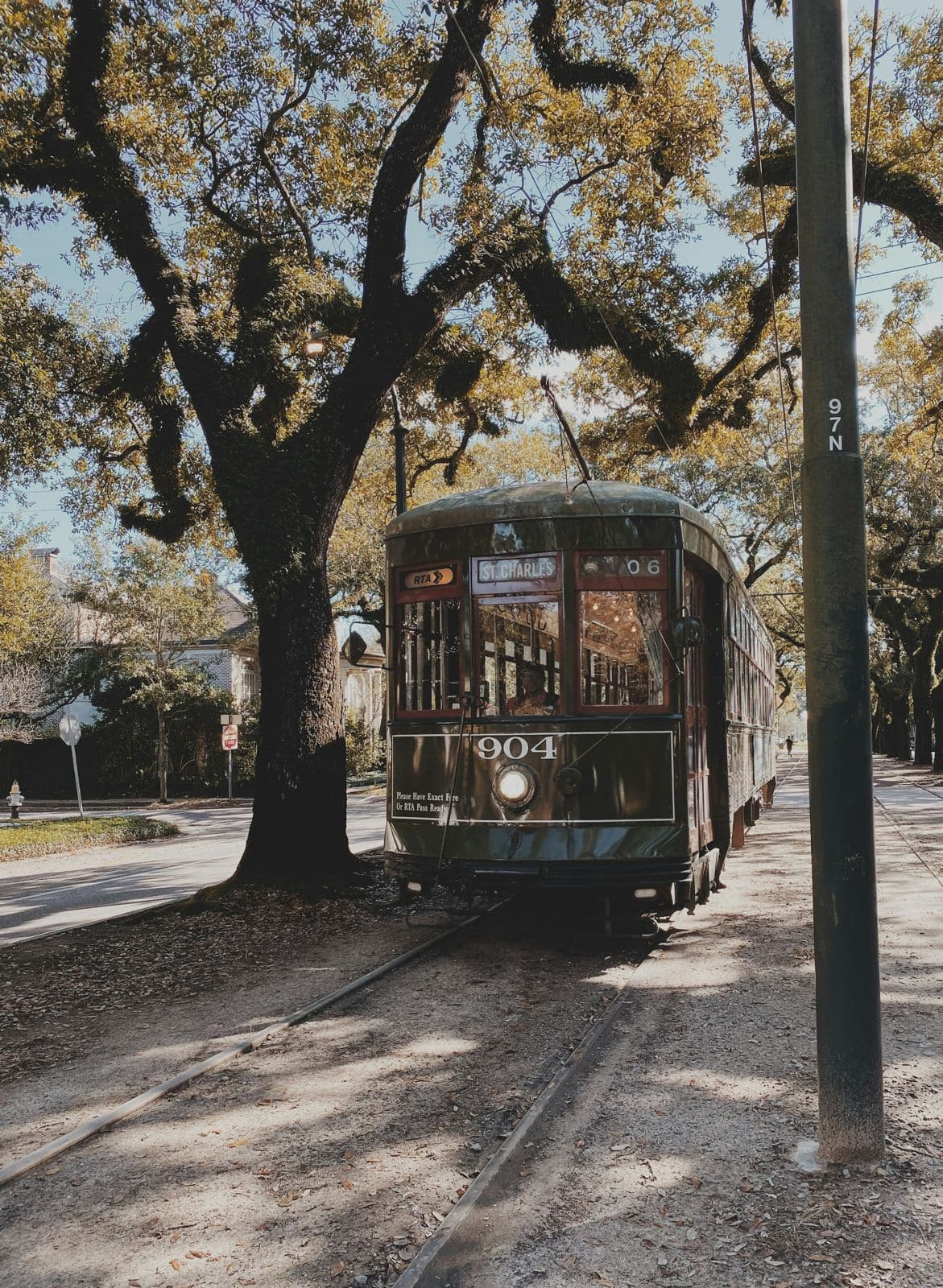
During Carnival, New Orleans stops working like a normal city. Streetcars get replaced by buses, whole neighborhoods close to cars, and the tow trucks are not bluffing. Here's how locals actually get around Mardi Gras: parking rules, road closures, rideshare, the ferry, and why walking usually wins.